Troubleshooting
Gas Oven Not Heating? The Most Common Cause (and One Easy Test)
April 10, 2026
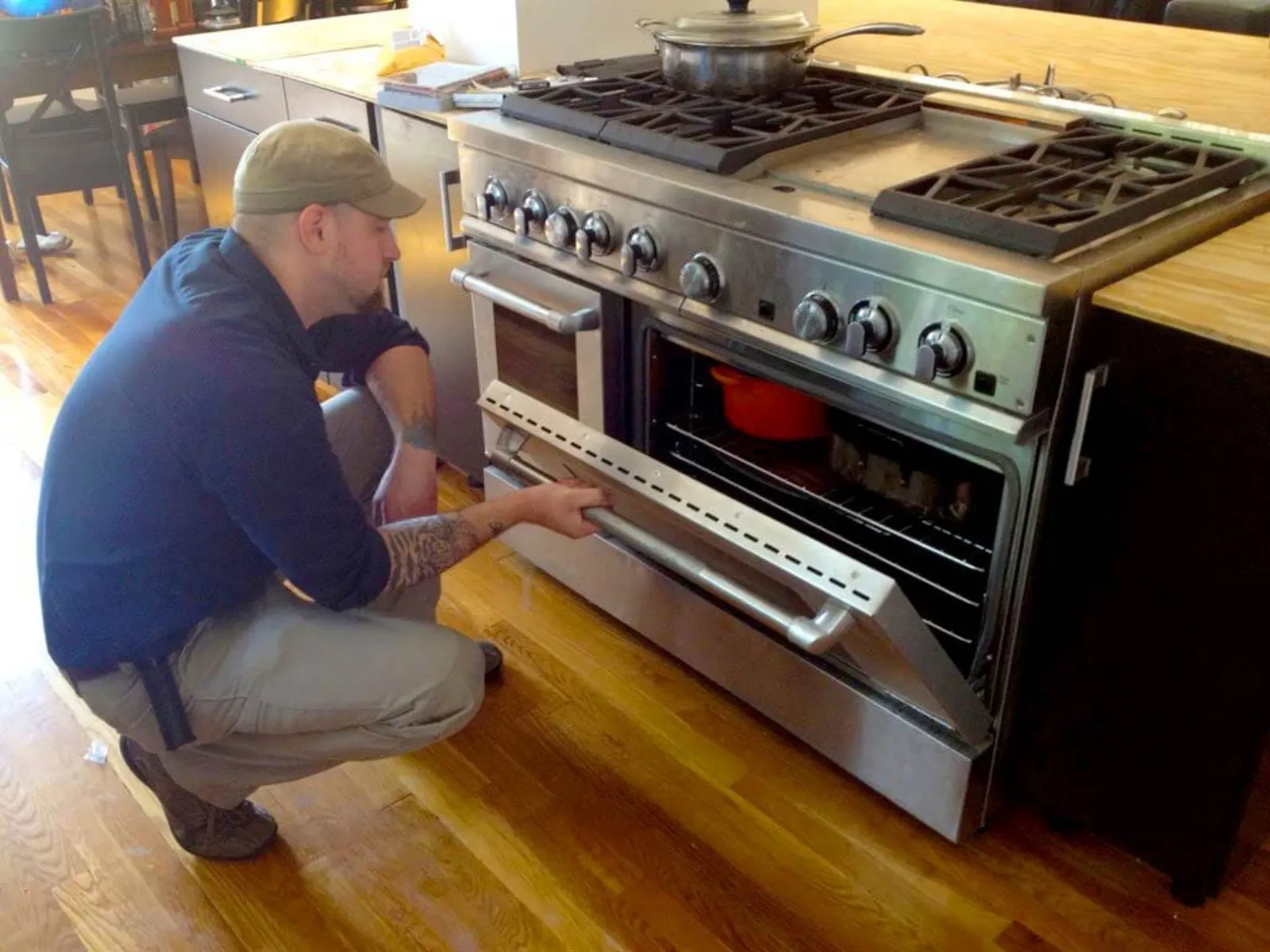
A gas oven that won’t heat is one of the more frustrating appliance failures — the burners on the stovetop may work fine, but the oven stays cold no matter what temperature you set. In our experience doing oven repairs across Los Angeles, the cause is the same thing the vast majority of the time: a failing or failed igniter.
That doesn’t mean it’s always the igniter. But it’s the right place to start.
How a Gas Oven Igniter Actually Works
This is worth understanding before you try to diagnose anything, because the igniter in a gas oven doesn’t work the way most people assume.
Gas oven igniters — specifically glow-bar (hot surface) igniters, which are used in virtually all modern gas ovens — are not just sparkers. They serve two functions simultaneously:
- They glow hot enough to ignite the gas
- Their changing resistance as they heat up is what opens the gas valve
The gas valve on a modern oven is a safety device — it won’t open unless it detects that the igniter has drawn enough current to indicate it’s hot enough to safely ignite the gas. This is intentional. Without this mechanism, a failed igniter would let raw gas into the oven without lighting it.
Here’s the critical part: igniters weaken over time. As a glow-bar igniter ages and degrades, it draws less current. Eventually, it reaches a point where it glows orange — it looks like it’s working — but it’s not drawing enough current to open the gas valve. The oven gets no gas, no flame, and no heat.
This is why “my igniter glows but the oven won’t light” is almost always still an igniter failure, not a gas valve failure.
The Visual Igniter Test
You can perform a simple visual test to determine whether the igniter is failing.
What you need: Just your eyes and a dark or dim room.
- Set the oven to bake at any temperature
- Open the oven door (don’t touch anything inside)
- Watch the igniter — it’s usually a flat rectangular element near the back of the bottom of the oven, next to the burner tube
- Time how long it takes to glow orange
What you’re looking for:
- 0–30 seconds to glow, followed by a flame: The igniter is working correctly
- 30–90 seconds to glow, followed by a flame: The igniter is weakening and will fail soon — but technically still functional
- 90+ seconds to glow, no flame: The igniter is too weak to open the gas valve. Replace it.
- Glows continuously but no flame: Same — the igniter isn’t drawing enough current to trigger valve opening
- Doesn’t glow at all: Igniter has failed completely, or it’s lost power (check the bake element circuit fuse if your oven has one)
The 90-second threshold is the standard specification on most oven igniters. Some manufacturers specify 60 seconds. Either way, if your oven is taking 2–3 minutes before any heat appears (or never heats), the igniter is the most likely cause.
Other Causes of a Gas Oven Not Heating
If the igniter is glowing bright orange within 60–90 seconds and the oven still won’t light, the problem is elsewhere. Here’s what to check next.
Gas Valve Solenoid Failure
The gas valve has coils (solenoid valves) that open when the igniter draws sufficient current. On a small number of ovens, these coils fail independently of the igniter. The igniter may test fine, but the valve won’t open.
How to tell: If the igniter glows brightly (drawing full current), the oven should light. If it’s drawing full current and the oven doesn’t light, test gas supply first (burner on stovetop), then the valve is a likely culprit.
DIY difficulty: Moderate to hard. The gas valve is typically behind the oven in a harder-to-access location and requires shutting off the gas supply.
Oven Temperature Sensor Failure
On ovens with electronic controls, a failed temperature sensor (thermistor) can prevent the oven from running properly — the control board relies on sensor readings to manage the bake cycle. A failed sensor may trigger an error code or cause the oven to not heat past a certain temperature.
How to check: Many modern ovens display an error code when the sensor fails. Consult your manual for codes. Common ones: F3 (Whirlpool/Maytag), F-3 (GE).
DIY fix: Oven temperature sensors are usually $20–$50 and accessible without full disassembly. The sensor is typically a small probe in the upper rear corner of the oven cavity, held by one or two screws.
Control Board Failure
Electronic control boards on modern ovens can fail and prevent the ignition sequence from initiating. This is more common on older electronic ovens and units that have experienced power surges. Symptoms include a display that lights up but the oven that never initiates the preheat cycle, or error codes that persist after a power reset.
DIY fix: Possible, but boards need to be sourced carefully by exact model number. Verify all other components first — boards are expensive and shouldn’t be replaced on speculation.
Thermal Fuse (Some Models)
Some gas ovens have a thermal fuse in the bake circuit that blows if the oven overheats. Once blown, the oven won’t heat — and the fuse needs replacement. This is more common on electric ovens but does appear on some gas models with electronic controls.
How to check: A blown fuse will have no continuity when tested with a multimeter.
Safety Warnings — Please Read
If you smell gas before attempting anything: Stop. Don’t touch switches. Leave the house. Call SoCalGas at 1-800-427-2200 from outside. This is not a DIY situation — raw gas in an enclosed space is an explosion risk.
Don’t run the oven if it’s producing a gas smell. Even if the gas smell is faint, a “partial lighting” situation where gas accumulates in the oven and then ignites is dangerous. Either the oven lights cleanly or it doesn’t.
After replacing an igniter: When you reconnect power and turn on the oven, stay present and watch for proper ignition. Don’t walk away from the first test cycle.
On Wolf, Viking, and Thermador ovens: The igniter replacement process varies by model and some require partial disassembly of the oven body. If you’re not comfortable with this, call a tech — the cost of a professional igniter replacement ($180–$280) is worth it compared to the risk of doing it wrong on a $4,000+ appliance.
DIY Difficulty Rating by Repair
| Repair | DIY Rating | Notes |
|---|---|---|
| Glow-bar igniter (standard ovens) | Moderate | 2–3 screws, one wire connector |
| Igniter on luxury ranges (Wolf, Viking) | Hard | May require partial disassembly |
| Temperature sensor | Easy | One probe, 1–2 screws |
| Control board | Moderate | Must source correct board by model |
| Gas valve solenoid | Hard | Requires gas shutoff, more access |
| Thermal fuse | Easy | If accessible |
When to Call a Tech
- You performed the visual igniter test and it’s failing, but you’re not comfortable with appliance disassembly
- The igniter tests bright orange but the oven still doesn’t light (gas valve or other issue)
- You smell gas at any point during troubleshooting
- You have a luxury range (Wolf, Viking, Thermador) with a more complex ignition system
- The oven is displaying error codes that don’t correspond to igniter or sensor failure
- You’re not sure what you’re dealing with
We do oven repair and range repair throughout Los Angeles with same-day service available. The diagnostic fee is $85 and is applied to the repair when you approve the work. Call us at (323) 806-3039.
On most standard gas oven igniter replacements, we’re done in under 90 minutes from arrival. It’s one of the more common and predictable repairs we do.