Troubleshooting
Washing Machine Won't Drain? Here's Why (and What to Fix First)
March 27, 2026
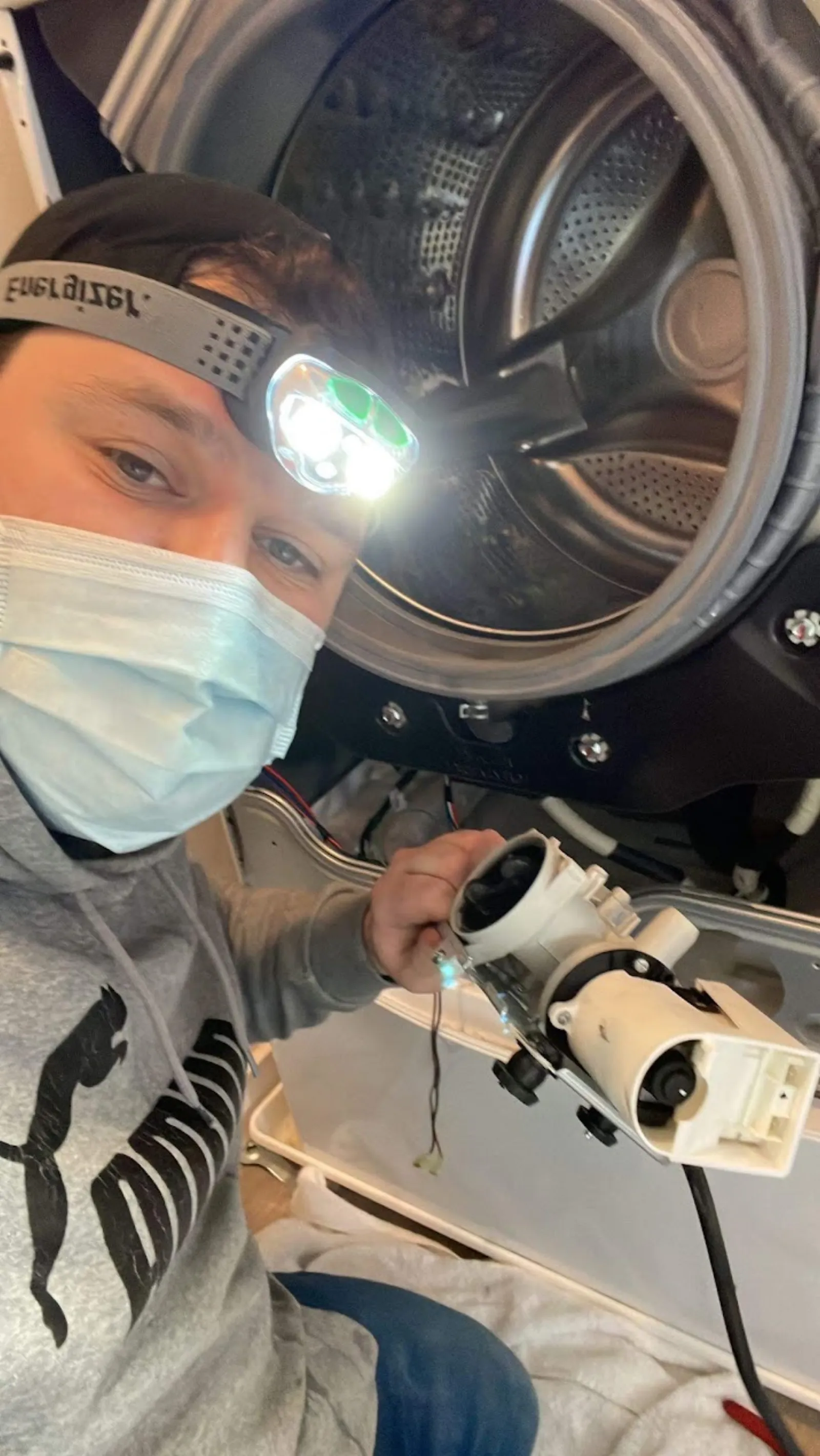
You open the washer and find clothes sitting in a tub full of water. The cycle finished — or seemed to — but the drum never drained. This is one of the most common washing machine problems we get calls about, and the good news is that a significant percentage of these cases have a DIY fix that takes about 10 minutes.
Here’s how to diagnose it.
Why Your Washer Won’t Drain
There are five main causes of a washer that won’t drain. They’re listed roughly in order of how often we see them.
1. Clogged Pump Filter (Front-Load Washers)
This is the #1 cause of front-load washers that won’t drain, and it’s almost always a DIY fix.
Modern front-load washers have a small filter — often called a coin trap or debris filter — that catches lint, coins, hair ties, and small items before they reach the pump. When this filter clogs, water can’t get through to drain. The washer runs the drain cycle, the pump spins, but nothing moves.
How to check and clean it:
Look for a small access panel at the very bottom front of your washer. It’s usually a rectangular cover about 4–6 inches wide that either pops open or has a slot for a coin to open it. Behind the panel you’ll find two things: a small drain hose with a cap, and the filter cap itself.
Before opening either, put down towels and have a shallow container ready — there will be water.
- Open the small drain hose and let water drain into your container (it’ll be slow)
- Once empty, unscrew the filter cap counterclockwise
- Pull out the filter
- Clean out whatever is in there — coins, hair, lint, small items
- Rinse the filter under running water
- Screw it back in firmly and close the panel
- Run a drain/spin cycle to confirm
Common brands with accessible front-panel filters: LG, Samsung, Bosch, Miele, Electrolux, Whirlpool front-loaders. The filter location varies slightly — on some LG models it’s in the lower-right corner, on some Samsung models it’s center-front. Check your manual if you can’t locate the panel.
2. Kinked or Clogged Drain Hose
The drain hose runs from the pump to the standpipe or utility sink behind the washer. If this hose is kinked, clogged with lint buildup, or has a blockage at the connection point, water won’t drain.
How to check:
Pull the washer away from the wall enough to see the back. Look at the drain hose — it should have a smooth, gradual curve down to the drain. Any tight bend or kink will restrict flow significantly. If the hose passes through a wall or has connectors, check those for blockages.
Also check the standpipe itself. In Los Angeles apartments particularly, shared drain pipes can back up. If multiple units in a building are having drain problems simultaneously, it’s almost certainly the building drain — not the individual washers.
Fix: Straighten any kinks and secure the hose with clips or ties to prevent recurrence. If the hose is clogged inside (rare but happens), it needs to be removed and cleared.
3. Failed Drain Pump
If the filter is clean, the hose is clear, and the washer still won’t drain — the drain pump has likely failed.
The drain pump is an electric motor with an impeller that physically moves water through the drain system. Pumps fail because of wear (they run every cycle), because debris gets past the filter and jams the impeller, or because a hard object (a coin, a bra underwire) breaks the impeller.
How to tell: When the washer enters the drain cycle, you should hear the pump motor running — a distinct hum from the bottom of the machine. If you hear nothing, or if you hear a struggling, grinding sound, the pump is the likely culprit.
DIY vs. professional: Pump replacement is possible DIY on many machines, but it requires significant disassembly on most front-loaders — tipping the machine, removing the front panel, accessing the pump from below. If you’re comfortable with appliance repair, there are good YouTube guides for most major brands. If not, it’s a straightforward call for a tech. On LG and Samsung front-loaders, pump replacement is one of the most common service calls we do and typically runs $180–$250.
4. Lid Switch (Top-Load Washers) or Door Lock (Front-Load)
Top-load washers have a lid switch that prevents the spin cycle from running when the lid is open — a safety mechanism. If this switch fails, the washer may fill and wash normally, but it won’t spin or drain because it thinks the lid is open.
How to check (top-load): With the washer paused and lid open, press the lid switch plunger manually (it’s usually a small plastic protrusion near the lid hinge). If the drain cycle starts when you press it and stops when you release it, the switch is failing. If it doesn’t respond at all, the switch has failed.
For front-load washers, the door lock mechanism serves a similar safety function. A door lock that fails to confirm closed will prevent the drain/spin cycle from completing. You may see an error code like dE (door error) on the display.
DIY fix: Lid switches are usually $15–$40 and relatively easy to access and replace on top-load washers. Door locks on front-loaders are more involved.
5. Blocked or Obstructed Standpipe
In Los Angeles apartment buildings — especially older buildings with shared plumbing stacks — standpipe backups are more common than in single-family homes. If your drain hose extends too far down into the standpipe, it can cause a siphoning effect that prevents proper drainage, or the pipe itself may be partially blocked.
How to check: During a drain cycle, observe whether water is coming back up from the standpipe rather than draining away. If water is gurgling back up or not draining at the standpipe level at all, it’s a plumbing issue rather than a washer issue.
Fix: This is a plumber’s call, not an appliance tech’s. If multiple drains in the unit are slow simultaneously, that confirms it’s a building drain issue.
Error Codes That Mean “Not Draining”
Modern washers display error codes when they detect a drain fault. Here are the most common:
| Brand | Error Code | Meaning |
|---|---|---|
| LG | OE | Drain error |
| Samsung | 5E / SE | Drain error |
| Whirlpool / Maytag | F21 | Long drain time |
| Bosch | E18 | Drain blocked |
| Miele | F11 | Pump fault |
An OE code on an LG front-loader almost always means a clogged filter or pump issue. Check the filter first — it takes 5 minutes and solves the problem in a large percentage of OE cases.
When to Call a Tech
Call us when:
- The filter was clean and the hose is clear, but the washer still won’t drain
- You hear no pump noise during the drain cycle (pump likely failed)
- You hear grinding from the pump area (jammed impeller — can damage the pump further if left)
- The lid switch or door lock replacement doesn’t resolve the issue
- Your washer is displaying error codes that persist after a filter cleaning
We service all major washer brands including LG, Samsung, Whirlpool, Bosch, Miele, GE, Maytag, and Speed Queen. Most washer drain repairs are completed in a single visit.
For washer repair in Los Angeles and surrounding areas, call (323) 806-3039. The $85 diagnostic fee is applied toward the repair when you approve the work.