Troubleshooting
Front-Load Washer Smells Musty: Why and How to Fix
November 8, 2026 · By Vladimir B., appliance technician
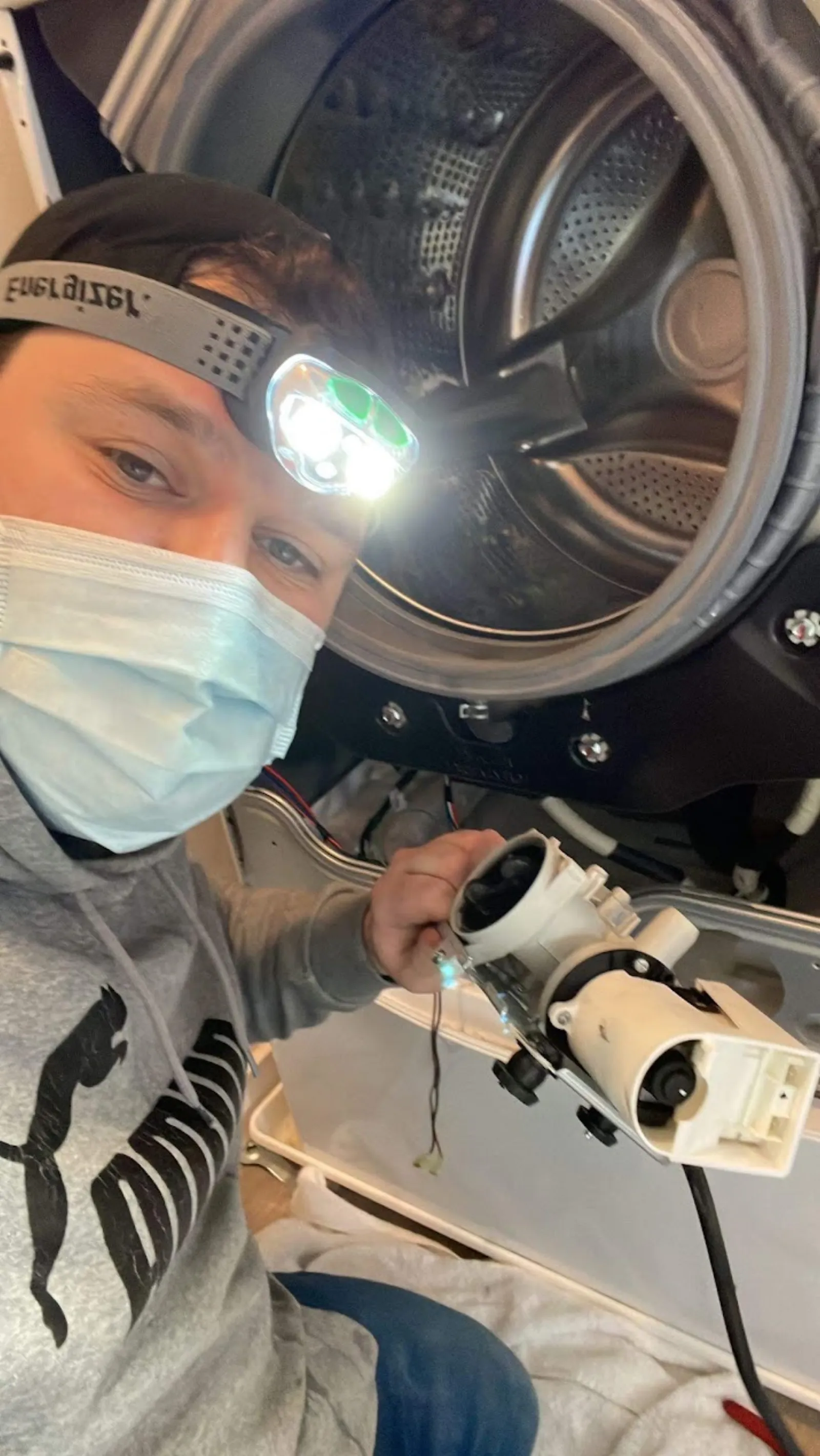
A musty front-load washer is one of the calls we get most often. In most cases the washer isn’t broken. It’s dirty. Roughly 8 out of 10 smell calls come down to mold and buildup in the drum, the door gasket and the detergent drawer. The other 2 are a clogged drain pump filter.
The good news is that you can fix most of it yourself in an afternoon. Here is where the smell comes from and what to do about each spot.
Why Front-Load Washers Start to Smell
Front-loaders use little water and close with a tight rubber seal. That is great for your laundry and your power bill, but it also means moisture stays inside after every load. Detergent, softener and lint leave a film, and mold feeds on it.
It isn’t a brand problem. We see it on every brand, and it always comes back to the same thing: the washer wasn’t cleaned or looked after regularly.
1. Check the Door Gasket
Pull back the folds of the rubber gasket and look inside. Black spots, slime or hair mean this is where the smell is coming from.
Wipe it with a cloth and a washer cleaner such as Affresh or Glisten, get into every fold, then dry it with a towel. If the gasket is stained black and the mold won’t come off, don’t keep scrubbing. Replace it. A moldy gasket keeps feeding the smell back into the drum. Never mix cleaners, bleach and vinegar in particular, because the fumes are harmful.
2. Run a Tub Clean Cycle
Most front-loaders have a drum-clean or tub-clean setting. Put a washer cleaner tablet in the empty drum and run the cycle. We recommend Affresh. Do this about once a month, or more often if you wash a lot of gym clothes, towels or pet bedding. Check your manual for what your manufacturer allows.
3. Clean the Detergent Drawer
Take the drawer all the way out. Many models have a release tab. Wash it with warm water and a brush, and clean the space behind it too. That space is where mold likes to hide, and it’s the part most people never look at. Let everything dry before you put it back.
4. Clean the Drain Pump Filter
This is the step people skip, and it’s about 1 in 5 of the smell calls we see. The filter catches whatever comes off your laundry before it reaches the pump. When we open one up, we find coins, bra underwires, socks, underwear and a lot of hair.
On front-load washers the filter is at the bottom, and on many models there is a small access door on the outside of the front panel. On top-loaders it is usually under the top cover of the cabinet. Check your manual for your model.
- Unplug the washer.
- Open the small access panel at the bottom front.
- Put a shallow pan and towels underneath, because water will come out.
- Turn the filter counterclockwise and pull it out.
- Clean off the debris, rinse the filter and put it back in firmly.
If the washer is also draining slowly, see our guide to a washing machine that won’t drain.
5. Use Less Detergent
Front-loaders use very little water, so extra detergent doesn’t rinse out. It stays behind as a film and the mold feeds on it. Use HE detergent, measure it, and go easy on fabric softener.
6. Keep the Drum Dry
Cleaning gets rid of today’s smell. These habits keep it from coming back:
- Leave the door open after every load, and the detergent drawer slightly open.
- Wipe the gasket dry after the last load of the day.
- Don’t leave wet laundry sitting in the drum.
- Do a hot wash once in a while, since cold-only cycles leave more residue.
7. When It’s Not Just Dirt
A smell turns into a repair when the water doesn’t drain for a long time. Standing water in the drum after a cycle points to the drain pump, the hose or a blockage further along, and no amount of cleaning will fix that.
A sewage smell is a different problem. It usually comes from the house drain line, not from the washer, for example a dry trap or a poorly vented standpipe. If it shows up when other fixtures drain too, it’s a plumbing question.
Quick Reference
| Where the smell comes from | What to do |
|---|---|
| Door gasket (black spots, slime) | Clean with Affresh or Glisten, dry it, replace it if stained |
| Whole drum, sour smell | Run a tub-clean cycle with a cleaner tablet monthly |
| Detergent drawer | Remove, scrub, dry before reinstalling |
| Drain pump filter | Unplug, drain, clear out coins, hair and lint |
| Clothes smell after washing | Cut the detergent, use HE detergent, run a hot wash |
| Water won’t drain | Call a technician |
When to Call a Technician
Call if you’ve cleaned the gasket, run a tub-clean cycle and cleaned the filter and the smell still comes back, or if water isn’t draining. Standing water in the drum, slow draining or an error code along with the smell all mean it’s time for a diagnosis.
We handle washer repair for all major brands across Los Angeles, with same-day service when you call before noon, including Samsung, LG and Whirlpool front-loaders. The diagnostic fee is $85 and is applied to the repair when you approve the work. Our repairs carry a 30-day labor and 90-day parts warranty.
Call (323) 806-3039 or book online.
Quick Answers
Why does my front-load washer smell even though I clean it? Check the two places people skip: the drain pump filter and the space behind the detergent drawer. Then cut back on detergent.
Can I use bleach to clean my washer? We suggest a washer cleaner such as Affresh or Glisten instead, and your manual has the final word. Never mix bleach with vinegar or other cleaners.
How often should I clean a front-load washer? Run a tub-clean cycle about once a month, wipe the gasket regularly and leave the door open between loads.
Will leaving the door open fix the smell? It stops new buildup, but it won’t remove mold that is already there. Clean first, then keep the drum dry.