Troubleshooting
Sub-Zero Not Cooling? Dual-Compressor Failure Points to Check First
July 21, 2026
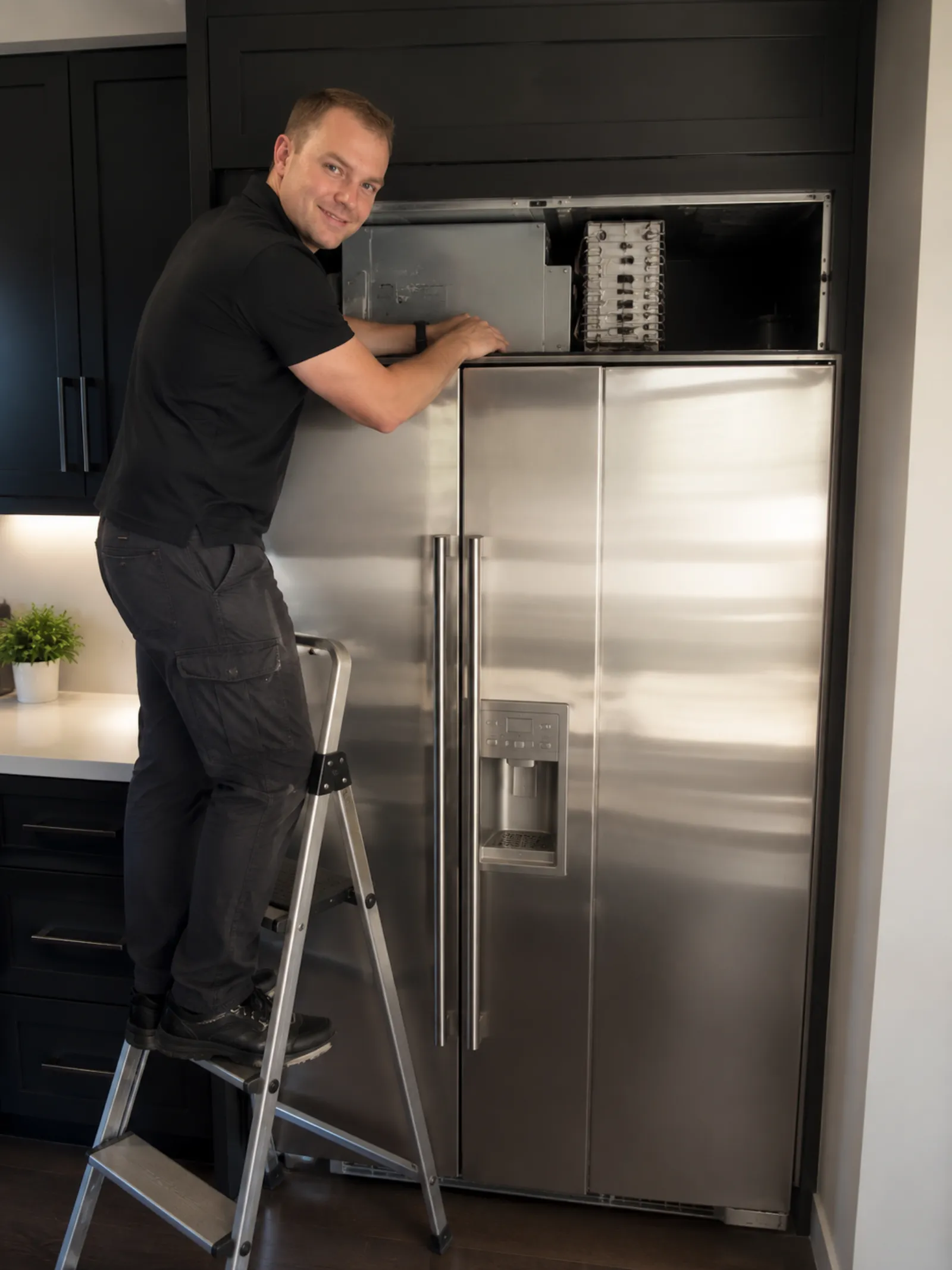
Most refrigerators run one compressor for both the fresh food and freezer compartments. Sub-Zero doesn’t — nearly every Sub-Zero refrigerator built since the 1990s uses a dual-compressor system, with one sealed system dedicated to the freezer and a separate one for the fresh food side. That’s a real engineering advantage (independent temperature and humidity control, no flavor transfer between compartments), but it also means “my Sub-Zero isn’t cooling” can mean two very different things depending on which side is affected.
Here’s how to narrow it down before calling for Sub-Zero refrigerator repair.
Step 1: Figure Out Which Side Is Affected
Check both compartments independently. This is the single most useful diagnostic step on a Sub-Zero, and it’s the first thing our technicians do on every service call.
- Only the fresh food side is warm, freezer is fine: The fresh food compressor, its evaporator fan, or that side’s sealed system has an issue. The freezer side is unaffected because it’s a completely separate refrigeration circuit.
- Only the freezer side is warm, fresh food is fine: Same logic, reversed — the freezer’s compressor or sealed system is the problem.
- Both sides are warm: Less common, and points toward something shared between both systems — usually the condenser (Sub-Zero units typically share one condenser coil location even with two compressors), a power/control board issue, or a ventilation problem affecting both compressors’ ability to shed heat.
Step 2: Check Airflow and Ventilation First
Sub-Zero built-in and column units are designed to be fully enclosed in cabinetry, which means they depend on a dedicated ventilation path (usually a kick plate grille at the bottom or a top vent) to exhaust heat from both compressors. This is the most common cause of “not cooling” complaints we see on Sub-Zero units that isn’t actually a component failure.
- Check: Is the kick plate grille blocked by rugs, storage bins, or debris? Is there at least 2 inches of clearance around any top or side vents?
- Why it matters: Both compressors work harder and can overheat and shut down on thermal protection if they can’t exhaust heat — this can look exactly like a compressor failure but costs nothing to fix.
- In Los Angeles specifically: Homes with Sub-Zero units built into tight kitchen islands or under counters are especially prone to this, since remodels sometimes block the original vent path.
Step 3: Listen for Which Compressor Is Running
With both compartment doors closed, put your ear near the base grille. You should be able to hear (or feel a slight vibration from) compressor activity. On many dual-compressor Sub-Zero models, only one compressor runs at a time in normal operation, cycling based on which side calls for cooling — so hearing silence for a few minutes isn’t automatically a fault.
- Neither compressor ever runs, and both sides are warm: Points to a shared power supply or control board issue rather than two coincidental compressor failures.
- One compressor runs constantly and never satisfies temperature: Suggests a refrigerant issue or a failed evaporator fan on that side — the compressor is working, but the cold air isn’t reaching the compartment.
Step 4: Check for Diagnostic Codes
Sub-Zero units with electronic control panels will often flash an error indicator or display a code rather than just running warm silently. If you’re seeing a code, our Sub-Zero error code guide walks through what the common ones mean — it’s worth checking before you assume the worst.
What This Usually Costs to Fix
Because Sub-Zero has two independent sealed systems, a single-side compressor or sealed-system repair is often less expensive than the same repair on a single-compressor fridge would suggest — you’re only touching one circuit, not the whole unit. Ventilation and airflow fixes are typically free or low-cost. Evaporator fan and start relay replacements on one side generally run in the same range as a standard refrigerator repair. Sealed-system and compressor work on either side costs more, consistent with any premium built-in refrigerator.
When to Call
Call for a diagnostic visit if:
- You’ve confirmed the vents are clear and one or both sides are still warm
- Only one side is affected and it’s been more than 24 hours
- You’re hearing a compressor run constantly without the compartment ever reaching temperature
- A diagnostic code is displayed that you can’t resolve from our error code guide
We provide same-day Sub-Zero repair throughout Los Angeles, Beverly Hills, and the Westside. Our technicians carry Sub-Zero OEM parts and diagnose which specific sealed system is affected before quoting any repair. The $85 diagnostic fee is applied toward your repair. Call (323) 806-3039 to schedule.